
Products
- Home
- Products
- Cable drag chains
- Enclosed metal carriers(SUS430)
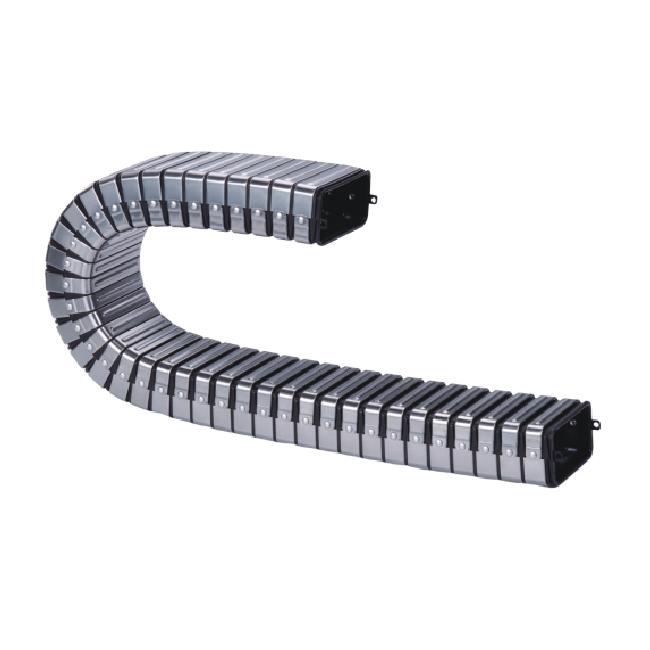
Cable drag chains
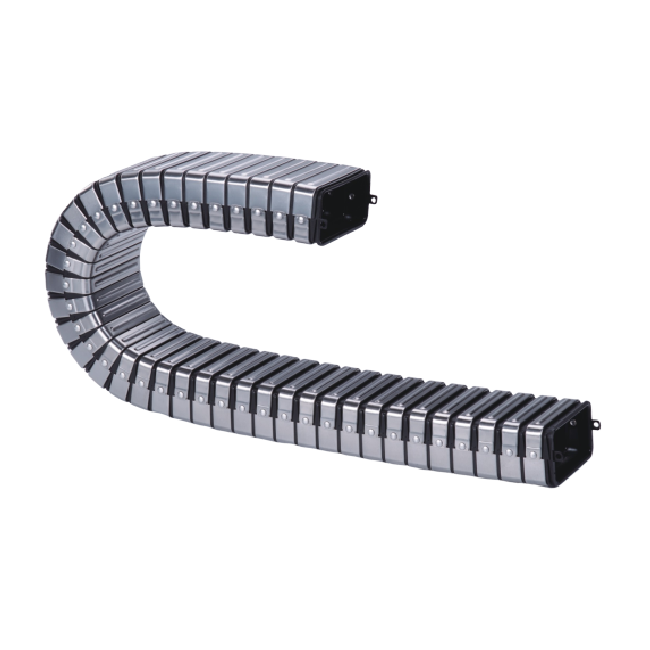
Enclosed metal carriers(SUS430)
- What is a metal drag chain?
- Metal drag chains are wire protection devices installed on CNC machine tools, five-axis metal cutting machining centers, and other similar equipment. Their main function is to protect electrical wires, oil pipes, air pipes, and other conduits from damage, exposure, or short circuits caused by friction during high-speed reciprocating motion of the machine.
- For automated production lines requiring long-term stable operation, conduit wear not only affects equipment lifespan but can also lead to unexpected downtime. Metal drag chains are designed to address the dual needs of operational safety and equipment integrity in these applications.
- The metal drag chain length can be customized to fit the equipment dimensions. They also offer rust protection, maintaining stable protection even under prolonged exposure to cutting fluid splashes, reducing maintenance frequency and replacement costs.
- Why is it durable and rust-resistant? The material and structure of the metal drag chain.
- The square-shaped traveling sleeve is manufactured using the following combination of processes:
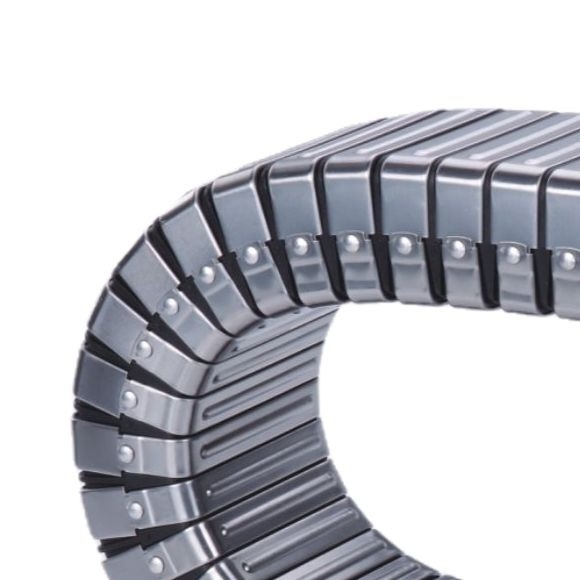
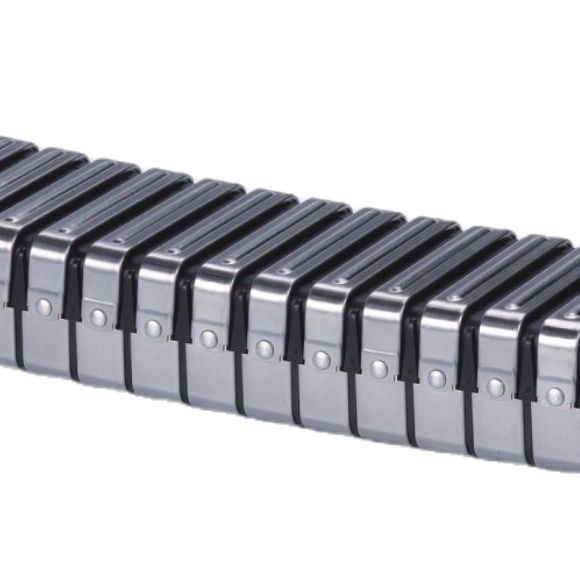
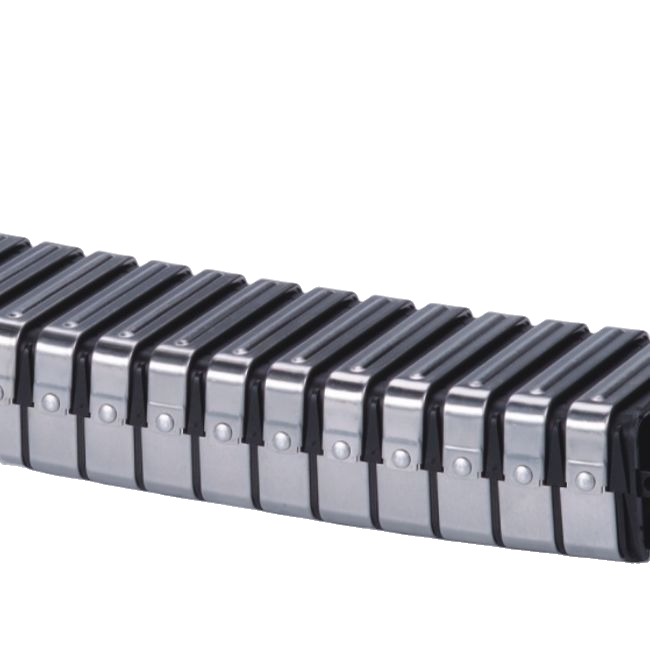
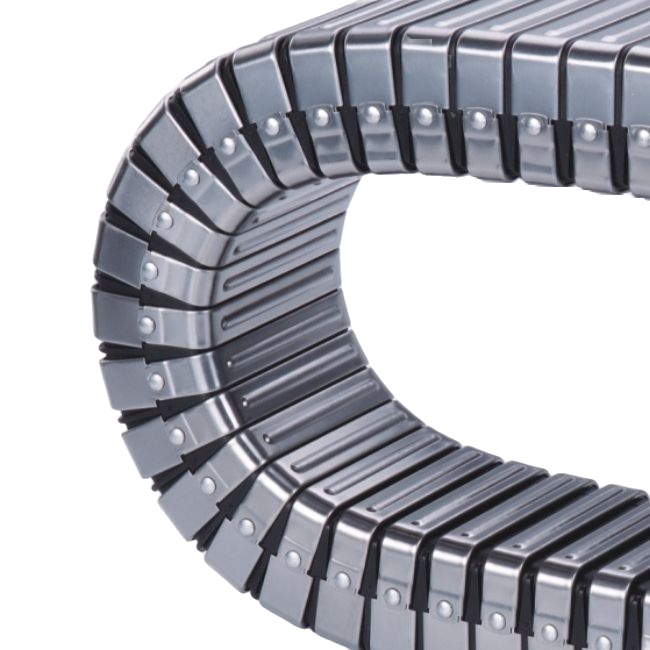
- 1. Main body material: 430 stainless steel (SUS430) + engineering plastic composite molding
- 2. End flanges: Aluminum alloy gravity die casting
- This material combination brings three substantial benefits:
- 1. Corrosion resistance: SUS430 stainless steel is not prone to rusting in cutting fluid and oil mist environments, extending its service life.
- 2. Wear resistance: The engineering plastic lining reduces the coefficient of friction between the pipeline and the sleeve, protecting the internal wiring.
- 3. Structural stability: The aluminum alloy flanges are die-cast, ensuring a tight fit and durability at the connection between the sleeve and the machine tool.
- With 36 years of experience in manufacturing machine tool components, the sleeve design balances structural strength and long-term protective performance.
- Advantages of metal drag chain | What problems can it solve?
- Common pain points | Square swimming tube protection solution
- Damage caused by wires rubbing against each other | Fully enclosed protective structure to isolate wires from direct friction
- Rust caused by cutting fluid splash | SUS430 stainless steel material, temperature-resistant and corrosion-resistant
- The operation of the equipment is noisy | Smooth line design, quiet during operation
- The messy appearance of the machine affects the look and feel | Uniformly coated pipelines, neat and beautiful appearance
- Standard size is not suitable | Customized length according to equipment specifications
- Square protective tubes are not just a "protection device", but also a practical solution to improve equipment availability and reduce maintenance costs.
- Application areas of metal drag chain
- Square-shaped floating pipes are widely used in the following industries and equipment:
- 1. Five-axis CNC machining centers: Highest demand for pipe protection under high-speed, multi-axis motion.
- 2. Metal cutting equipment: Environments requiring prolonged cutting fluid splashing.
- 3. Automated production line equipment: Reciprocating motion mechanisms such as robotic arms and drive shafts.
- 4. Various machine tool industries: Areas requiring a balance between safety and aesthetic integrity.
- Whether introducing new equipment or upgrading the pipe protection of existing machines, square-shaped floating pipes can provide corresponding solutions based on actual needs.
- Frequently Asked Questions (FAQ)
- Q1: Can the square travel sleeve be customized in length?
- Yes, the sleeve length can be customized based on the equipment stroke and installation space to ensure a perfect fit to the machine.
- Q2: Is the square sleeve heat-resistant? Is it suitable for use in cutting fluid environments?
- The square sleeve is made of a combination of SUS430 stainless steel and engineering plastics, possessing heat resistance and rust prevention properties, making it suitable for machining environments where it is exposed to cutting fluid splashes for extended periods.
- Q3: What is the difference between square and round sleeves?
- Square sleeves have a smoother, cleaner appearance, suitable for applications where the overall appearance of the equipment is important. Actual selection should be based on an assessment of the machine's piping configuration and installation space.
- Q4: Does the square sleeve require regular maintenance after installation?
- It is recommended to regularly check the sleeve's airtightness and appearance. If the machine is exposed to high humidity or strong acid/alkali cutting fluid environments for extended periods, the inspection schedule should be arranged according to usage conditions.
(1).png)
(3).jpg)
.png)
.png)