
Products
- Home
- Products
- Cable drag chains
- Open Type Cable Drag Chain
Cable drag chains
Open Type Cable Drag Chain
- What is an open-type cable drag chain?
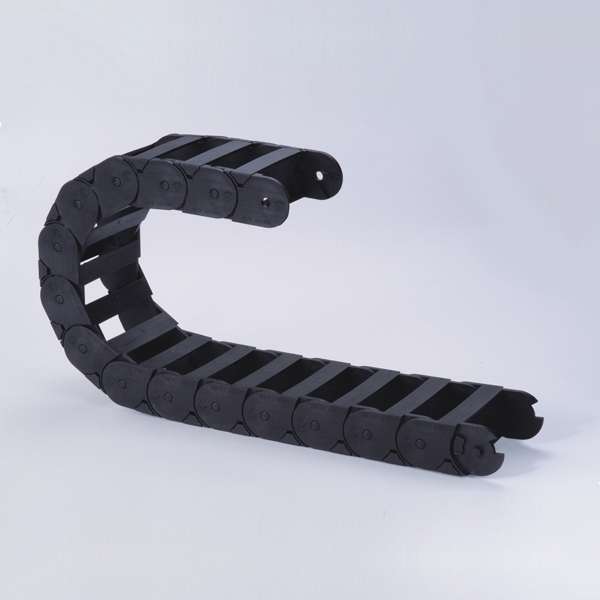
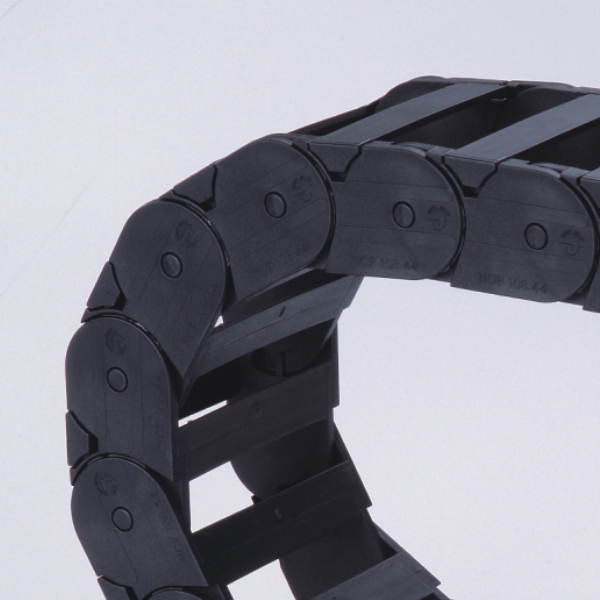
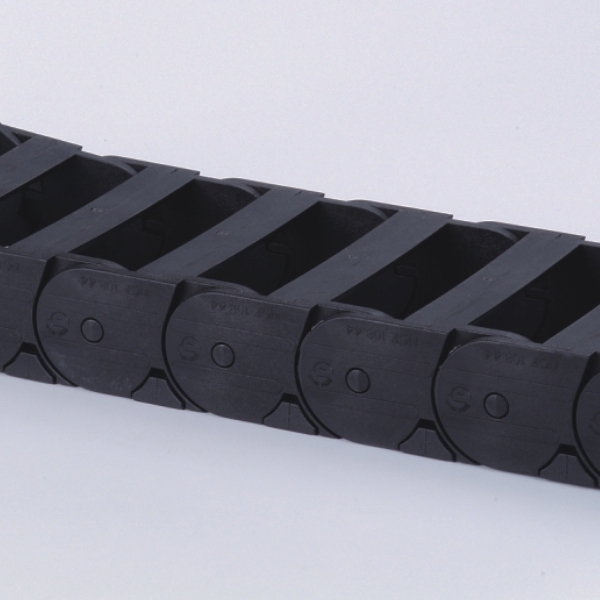
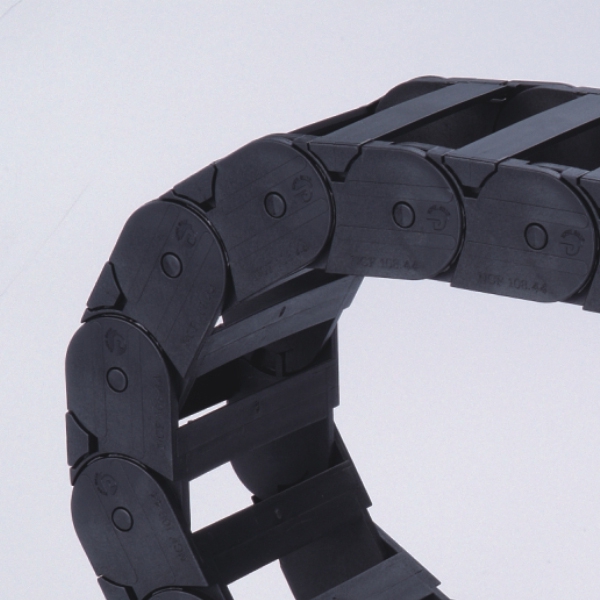
- An open-type cable drag chain is a plastic cable drag chain with an openable top crossbar. It is designed to protect the electrical wires, oil pipes, and air pipes of machine tools, laser equipment, and automated production lines during operation, preventing damage from friction during reciprocating motion and maintaining a neat appearance of the machine's wiring. The biggest difference between an open-type cable drag chain and a fully enclosed one is that the top crossbar can be opened at any time, allowing for the installation, inspection, and maintenance of cables without disassembling the entire cable drag chain.
- Why does the equipment need to be equipped with a cable drag chain?
- Cables in machine tools and automated production lines are constantly subjected to high-frequency reciprocating or bending motions. Without cable chain protection, these cables are prone to wear and tear due to repeated friction, leading to short circuits, abnormal signals, or even machine shutdowns. The function of cable chains is to centrally wrap and bend electrical wires, oil pipes, and air pipes along a fixed path, distributing stress, reducing wear, and making wiring neater and easier to track and maintain. They are an indispensable cable management component for the long-term stable operation of automated equipment.
- Three core advantages of open type cable drag chain
- Faster Maintenance and Repair: The top crossbar can be easily opened, allowing for the replacement, inspection, and addition of internal pipelines without disassembling the entire cable chain, significantly reducing downtime for maintenance.
- Durable and Deformation-Resistant: The main body is injection molded from engineering plastic steel, possessing excellent corrosion resistance and structural strength. It is not easily deformed over long-term use and can withstand heavy pressure and high-frequency motion.
- Customizable to Equipment Needs: The cable chain length can be flexibly designed according to machine size and stroke distance, suitable for various sizes of machine tools and automated equipment.
- Material and structural design
- Open-type cable chains consist of two main parts:
- Components | Materials | Characteristics
- Cable Chain Body | Injection Molded Engineering Plastic Steel | Corrosion Resistant, Wear Resistant, Deformation Resistant, Can Withstand Long-Term Repeated Movement and Heavy Pressure
- Fixed Flange | Gravity Stamped Steel Plate | Sturdy Structure, Enhances the Connection Strength Between the Cable Chain and the Machine Tool
- This combination of materials allows open-type cable chains to combine the corrosion resistance of plastic steel with the structural stability of steel plate flanges, making them suitable for long-term operation in industrial environments.
- Application scenarios
- Open-type cable chains are widely used in the following equipment and industries:
- 1. Machine tools (CNC machining centers, lathes, milling machines, etc.)
- 2. Laser cutting and laser processing equipment
- 3. Automated production lines and robotic arms
- 4. 3D printing machine tools
- In these applications, cable chains protect power lines, sensor lines, oil lines, and air lines, preventing damage caused by friction between the lines during equipment operation. They also reduce the risk of unexpected downtime due to line failures, making them a crucial component for improving the safety and stability of equipment operation.
- Frequently Asked Questions (FAQ)
- Q1: How to choose between open and fully enclosed cable chains? If the internal piping of the equipment requires frequent inspection, replacement, or addition, open cable chains offer higher maintenance efficiency because the top crossbar can be opened. If the environment has a lot of dust and oil, and the piping configuration is fixed and not frequently moved, then fully enclosed cable chains can be considered for enhanced protection.
- Q2: Can open cable chains be customized in length? Yes. The length of open cable chains can be customized according to the equipment size, travel distance, and cable quantity to meet the actual installation needs of different machines.
- Q3: Are open cable chains suitable for outdoor or high-temperature environments? The main material of the cable chain has certain corrosion resistance and weather resistance properties. The actual applicable temperature and environmental conditions will vary depending on the design specifications. It is recommended to select the corresponding specifications based on the actual usage environment (temperature, dust, oil level), or consult a technician to confirm the appropriate material and model.
- Q4: How often do cable chains need maintenance? It is recommended to regularly check the internal pipelines of the cable chain for wear, deformation or abnormal noise, depending on the frequency of equipment use and environmental conditions. For open-type cable chains, the top crossbar can be lifted directly for inspection without stopping the machine to disassemble the entire cable chain, which can effectively shorten maintenance time.
(1).png)
(1).png)