
Products
- Home
- Products
- Bellows way covers
- U-type bellows way covers
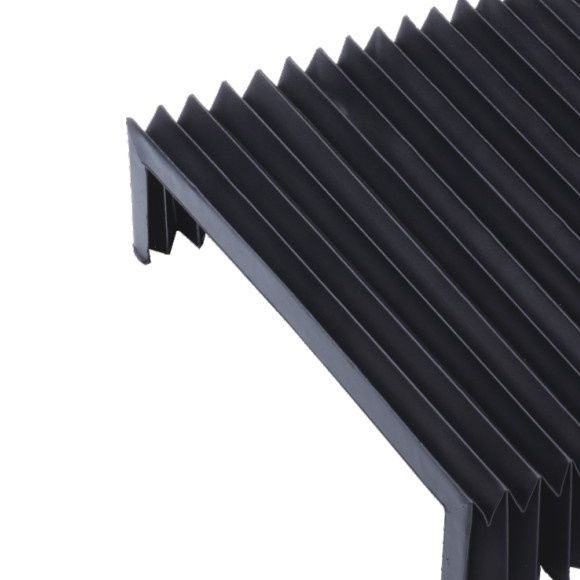
Bellows way covers
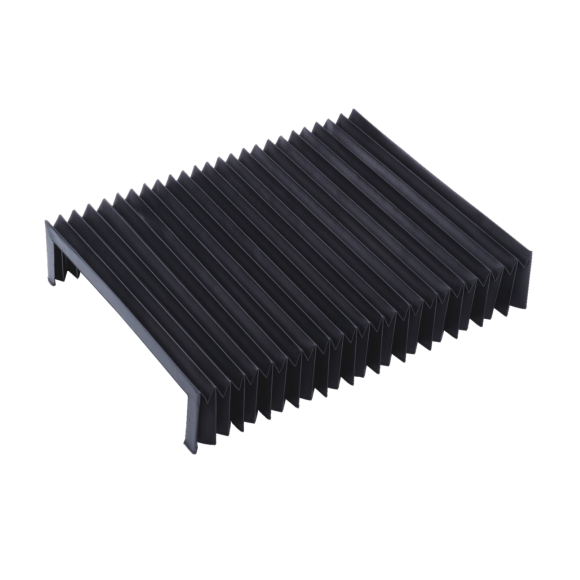
U-type bellows way covers
- What is a U-shaped dust cover?
- The U-shaped dust cover is a protective component installed on the drive rails of machine tools, gantry surface grinders, PCB processing equipment, semiconductor equipment, etc., named for its U-shaped cross-section. Its function is to cover and protect the drive rails during equipment operation, preventing dust, oil, and moisture from entering and causing wear, allowing the spindle to maintain smooth movement and machining accuracy, while extending the overall service life of the equipment.
- The installation dimensions, extension length, and cover material can all be customized according to equipment specifications and the operating environment, making it an indispensable key component for dust protection of precision equipment.
- Why does the equipment need to be fitted with a U-shaped dust cover?
- When machine tools and precision equipment operate for extended periods, prolonged exposure of the tracks to dust, cutting oil, moisture, or acidic/alkaline environments can easily lead to:
- • Track wear and chip jamming, resulting in decreased machining accuracy
- • Spindle movement difficulties, affecting equipment operating efficiency
- • Increased maintenance frequency and shortened equipment lifespan.
- Installing a U-shaped dust cover is a direct solution to these problems: by covering the tracks with the dust cover, external contaminants are isolated, allowing the equipment to maintain stable accuracy and a longer service life, while reducing long-term maintenance costs.
- Material and structure of U-shaped dust cover
- Parts | Material | Function
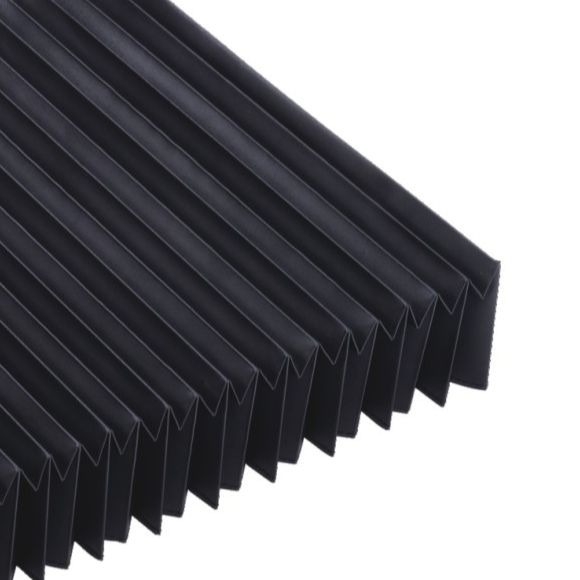
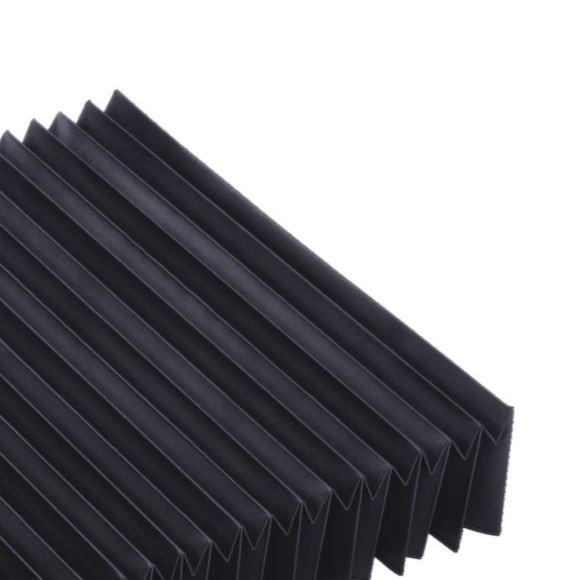
- Main Body Leather | Rubber and Plastic Leather | Main protective layer; different materials can be selected according to weather resistance and temperature resistance requirements.
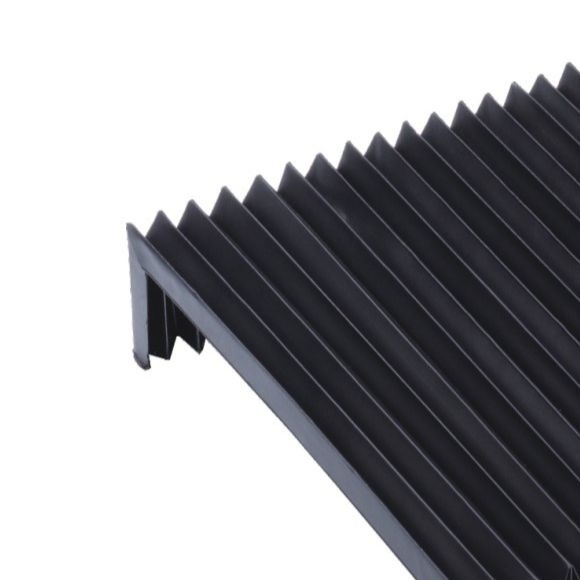
- Front and Rear Flanges | Metal Sheet Metal | Fixed to both ends of the equipment rail, providing structural stability.
- Internal Parts | (Optional) | Auxiliary support, control of expansion and contraction, and extension of service stability.
- The leather material will be evaluated and recommended based on the customer's different requirements for compression size, operating environment, and durability to ensure that the dust cover provides the best protective effect in the actual use environment.
- Five Advantages of U-Shaped Dust Covers
- 1. Multiple protective capabilities: oil-proof, waterproof, dustproof, acid and alkali resistant, antistatic, and UV resistant.
- 2. Customizable ratings: Temperature resistance rating, IP protection rating, and cleanroom rating (e.g., Class 1000) can be specified according to requirements.
- 3. High compatibility: Suitable for various CNC machine tools, electronic instruments, and semiconductor equipment.
- 4. Fully customizable design: Installation dimensions, compression dimensions, operating environment, and service life can all be tailored to specific needs.
- 5. Extended equipment lifespan: Effectively prevents dust from entering the guide rails, reducing equipment precision wear and maintenance frequency.
- Application industries and equipment
- U-shaped dust covers are widely used in the following equipment fields:
- • Traditional machine tools, CNC machine tools
- • Gantry surface grinders
- • PCB forming machines, PCB drilling machines
- • Waterjet cutting machines
- • Wood carving machines
- • Semiconductor processing equipment
- By installing dust covers, dust and particulate matter can be effectively prevented from entering the machine's guide rails, avoiding any impact on the machine's accuracy and lifespan. This is an important protective solution for improving equipment stability in the precision manufacturing industry.
- Frequently Asked Questions (FAQ)
- Q1: Can U-shaped dust covers be customized in size? Yes. We will design the leather material and structural configuration tailored to the installation space, compression/extension length, and usage environment provided by the customer.
- Q2: Are dust covers suitable for cleanroom environments? Yes. We can manufacture dust covers that meet cleanroom standards (e.g., Class 1000) according to customer requirements.
- Q3: How should I choose the leather material for dust covers? It's necessary to comprehensively consider the usage environment (dust, oil, moisture, acids/alkalis), compression dimensions, and service life. We recommend that a professional evaluate and recommend materials based on the actual working conditions to ensure protective effectiveness and lifespan.
- Q4: Which equipment needs U-shaped dust covers? Dust covers are recommended for any equipment with a sliding rail drive structure and operating environment with a risk of dust or liquid contamination, such as CNC machine tools, gantry grinders, PCB processing equipment, and semiconductor equipment, to protect the accuracy of the tracks.
.png)