
Products
- Home
- Products
- Bellows way covers
- Bellows way covers for linear slide
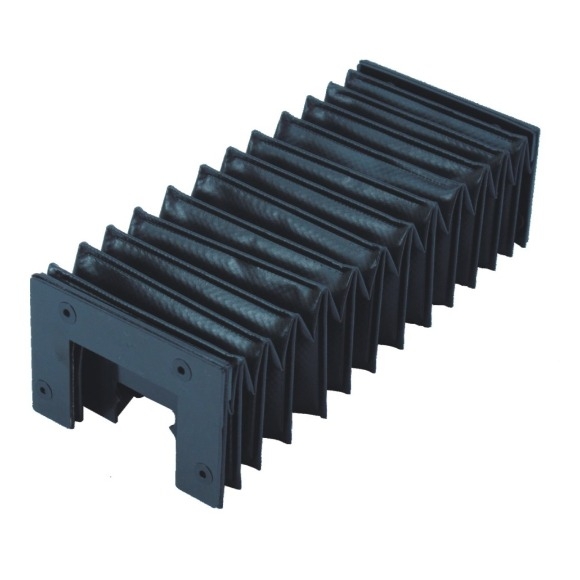
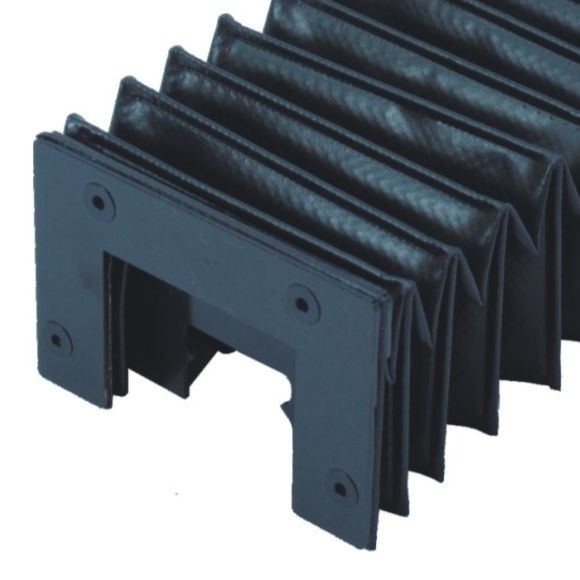
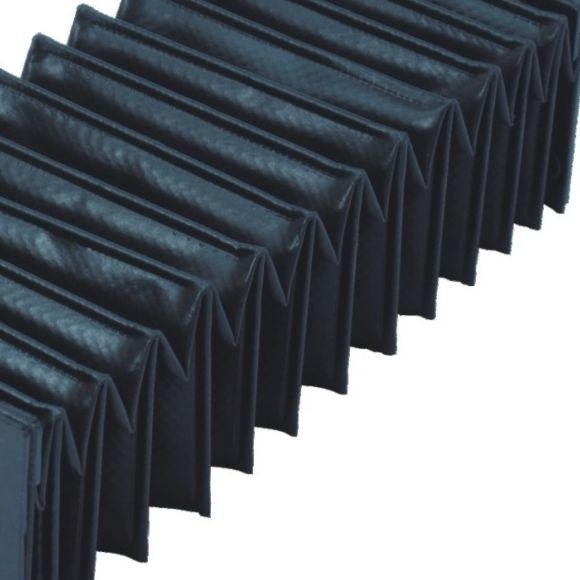
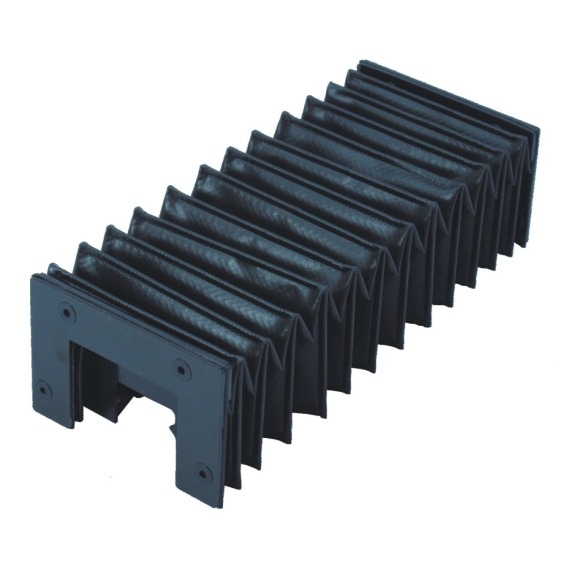
Bellows way covers
Bellows way covers for linear slide
- Why do equipment slide rails need bellows covers?
- When machine tools, PCB drilling machines, and semiconductor equipment operate for extended periods, if the guide rails are directly exposed to dust, cutting oil, coolant, or a humid environment, foreign objects can easily become lodged between the rails and the ball bearings, leading to:
- 1. Spindle movement becoming obstructed and vibrating, resulting in decreased machining accuracy.
- 2. Increased rail wear, leading to more frequent maintenance and replacements.
- 3. Downtime for repairs causing time and cost losses on the production line.
- The function of the linear guide dust cover is to form a retractable protective layer on the outside of the guide rail. It compresses and expands synchronously with the spindle movement, continuously blocking contaminants from entering the rail. It is one of the key components for extending the lifespan and precision of the equipment.
- Material and structure: how to customize according to needs
- The structure of the linear rail dust cover is mainly divided into three parts. Each part can be adjusted according to the customer's compression size, installation space and use environment requirements:
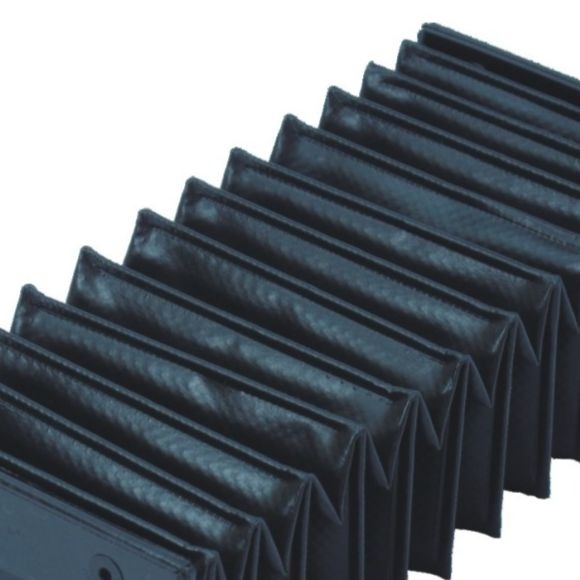
- 1. Main body leather: Made of soft rubber and plastic leather, different materials are selected according to the protection level (waterproof, acid and alkali resistance, UV resistance, etc.) and expansion and contraction life requirements.
- 2. Front and rear sheet metal flanges: Made of metal to ensure installation tightness and structural stability with the machine slide rails.
- 3. Internal reinforced components: Rollers, steel scissor clips, support plates, restraints and other accessories are installed according to the actual use situation to improve the durability and guidance stability of the dust cover under high-frequency reciprocating motion.
- Since the slide rail size, compression stroke and installation space of each device are different, most dust jackets are produced one-to-one customization instead of standard universal parts.
- Protection specifications and advantages of linear rail dust bellows cover
- Protection items |Explanation
- Basic protection | Oil-proof, waterproof, dust-proof, acid and alkali resistance, anti-static, anti-UV
- Optional specifications | Specify temperature resistance level, IP protection level, clean room level (such as Class 1000) as required
- Applicable equipment | Various CNC machine tools, traditional machine tools, electronic instruments and devices, semiconductor equipment
- Customized items | Installation size, compression size, leather material, and service life can all be adjusted according to the on-site environment
- This means that the dust jacket is not a single specification consumable, but a customized part that requires separate evaluation of material and structure according to the machine model and processing environment (dust amount, oil and gas, humidity, cleanliness requirements).
- Application field
- Equipment Type | Common Protection Requirements
- Traditional machine tools/CNC machine tools | Block cutting dust and iron filings from entering the track, maintaining long-term machining accuracy
- PCB molding machine/PCB drilling machine | Protect micron-level precision tracks to prevent dust from affecting drilling positioning accuracy
- Waterjet cutting machine | High waterproof requirements to prevent water vapor and moisture from intruding into the transmission system
- Woodworking engraving machine | Protect the slide rails and ball screws in an environment with a lot of wood dust
- Different equipment has different pollution sources and accuracy requirements. Therefore, the leather material selection and structural design of the dust cover will be planned separately according to the actual application site.
- Frequently Asked Questions FAQ
- Q1: Does the linear rail dust cover have to be customized? Can I use standard products? Since each piece of equipment has different slide rail installation dimensions, compression strokes, and usage environments (dust volume, oil and gas, humidity), in most cases it is recommended to customize it according to the actual equipment specifications to ensure tightness and protection, and to avoid premature wear or protection failure due to inappropriate dimensions.
- Q2: How to choose the material of dust cover? It is mainly judged based on three conditions: the use environment (whether it is exposed to oil, water, acid and alkali, UV radiation), the frequency and stroke of expansion and compression, and the equipment's requirements for temperature resistance or cleanliness (such as clean room level), and then select the corresponding leather material.
- Q3: What information do I need to provide when ordering a customized dust jacket? Generally, the installation dimensions, telescopic (compression) length, usage environment conditions (whether waterproof, acid and alkali resistance, UV resistance, clean room grade, etc.) are required, as well as the equipment model or slide rail specifications to facilitate the evaluation of material and structural design.
- Q4: Can the protection level of the dust jacket be specified? Can. In addition to the basic oil-proof, waterproof, dust-proof, acid and alkali resistance, anti-static, and anti-UV protection, specifications such as temperature resistance level, IP protection level, or clean room level (such as Class 1000) can also be specified according to the needs of the production line.
- Q5: Which equipment needs to be installed with line rail dust boots? It is recommended to install it on any equipment that uses slide rail transmission and has an operating environment with dust, cutting chips, water vapor or oil vapor. It is commonly found in CNC machine tools, traditional machine tools, PCB molding machines, PCB drilling machines, water jet cutting machines, woodworking engraving machines, semiconductor equipment, etc.
- Customized services and processes
- The design of the linear rail dust cover needs to consider four variables at the same time: installation size, compression stroke, leather material and usage environment. Based on the equipment specifications and site conditions provided by the customer, we will help evaluate the most suitable leather material and structural configuration (such as whether rollers, steel scissor clamps, support plates or restraints need to be added) to ensure that the dust cover can still maintain the protective effect and service life under long-term high-frequency reciprocating motion.
%20-%20%E8%A4%87%E8%A3%BD.jpg)
%20-%20%E8%A4%87%E8%A3%BD.jpg)